


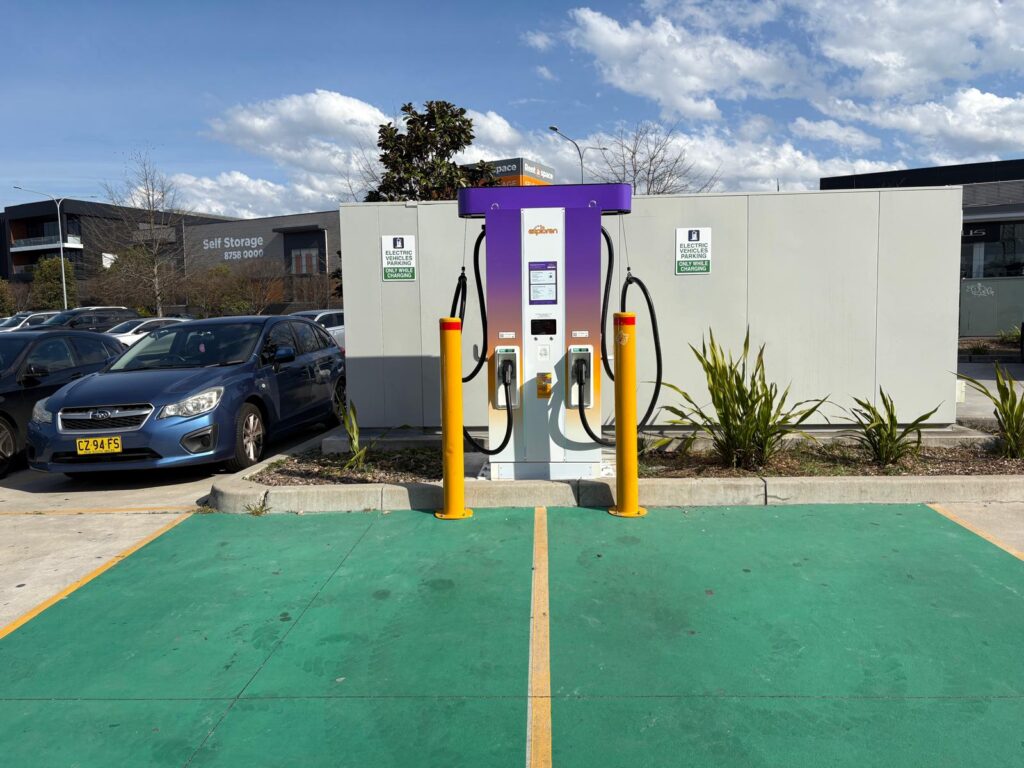
Here’s the thing with DC Charging, that big number you see, whether it’s 150 kW or 350 kW, is the maximum the charger can give. It doesn’t mean your car will always take that much. The actual speed depends on a bunch of moving parts.
For starters, your car sets the rules.
Every EV has its own maximum. Some max out at 100kW, and only a few models can really take advantage of those ultra-fast chargers. So even if you plug into a 350 kW unit, your car will only take in as much as it’s built to handle.
Then there’s your battery’s state of charge.
They charge fastest when they’re low – think between 10 and 40 percent. As the battery fills up, your car deliberately slows the power down to protect itself. That’s why the first half of a charge flies, but the last bit feels like forever.
Temperature matters too.
If the battery is too cold, like on a winter morning, or too hot after a long drive, the car eases off until things settle. Some newer EVs can even pre-warm or pre-cool the battery before you arrive, but not every model does that yet.
Another thing most people don’t realise: EV chargers can share power.
On some units, if two cars plug in at the same time, the energy gets split. So that “150 kW” might become 75 kW each until one car finishes.
And finally, sometimes it just comes down to the site itself.
Shopping centres, regional areas, or places with heavy demand might temporarily limit output because the grid can’t supply unlimited power all at once.
We keep a close eye on Public EV Chargers across Australia If you may need assistance, call our friendly Customer Care team on 1300 755 087 or email us at [email protected]
So yes, the number on the charger is the headline figure, but the reality depends on your car, your battery, and the conditions that day.